Merrick Mayfair
Blood CanticleMerrick Mayfair is a powerful psychic, scholar, and sorceress from a downtown branch of the Mayfair family who becomes a vampire after spending much of her life within the Talamasca. Her brief existence among the Undead culminates at Blackwood Farm, where she sacrifices herself to destroy Goblin, the ghost that has tormented Quinn Blackwood since childhood. Remembered both as a person who chose the Blood and as someone whose death cannot be reversed, Merrick becomes a measure of the limits of Lestat’s power and his uncertain understanding of salvation.
Identity and Background
Merrick belongs to a branch of the Mayfair family that its better-known relatives did not know well. Rowan Mayfair recalls learning that Merrick was a Black Mayfair, descended from a downtown branch, and that she had formidable psychic abilities. The family’s ignorance of her becomes part of the larger pattern of Mayfair secrets: Rowan remembers that the family resented discovering other Mayfairs of whom they had known nothing.
Merrick grew up in the Talamasca, whose members studied supernatural phenomena, and spent most of her life within the Order. Although she knew about the First Street Mayfairs, she reportedly did not seek contact with them. She had nevertheless visited the First Street house during a public holiday tour held as a benefit for preservationists, after Michael Curry had restored the property. The visit placed her, briefly and unnoticed, inside the family home that Rowan later regarded as the nucleus of their history.
Merrick’s relative Oncle Vervain, remembered as a respected Voodoo doctor, had foreseen that she would one day walk with the Blood Children. According to Tante Oscar, the vision grieved him, but he told no one else. The prophecy links Merrick’s eventual vampirism to a future anticipated within her family, even though Merrick herself had lived apart from the First Street branch and its knowledge of her.
From the Talamasca to the Blood
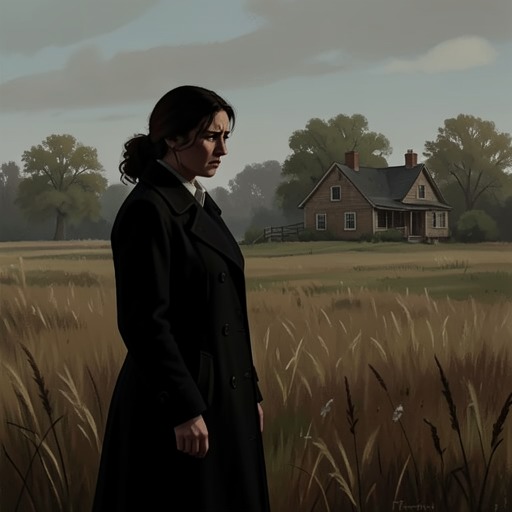
Merrick’s disappearance from the Talamasca caused confusion and rumors of evil. Rowan recalls that the disappearance was the point at which Stirling Oliver came South. Much later, Rowan and other Mayfairs found Merrick living as a hermit in a poor neighborhood. She recognized them, was pleasant, and complimented Rowan on the Medical Center, but did not invite the visitors inside. She said she had not truly disappeared; she had simply withdrawn from the world.
Rowan’s recollection emphasizes Merrick’s difference from ordinary human life. Her voice had a rich musical quality, and Rowan sensed that her movement and physical presence did not conform to what she expected of a human woman. The encounter persuaded Rowan that Merrick had become one of the Blood Children, though the family had not known when or how this change took place. Tante Oscar later explained that the Blood Children had lived in the French Quarter for two hundred years, feeding on people she described as riffraff, and said that Merrick was now among them. In that account, Merrick would live forever.
The transformation also draws Lestat into a conflict between action and remorse. He says that Oncle Julien had tried to prevent the catastrophe, and later judges that Merrick’s becoming one of the vampires was not Julien’s fault: Julien had entrusted her to the Talamasca. Lestat’s retrospective assessment places Merrick’s turning among the consequences that cannot simply be assigned to one person’s wrongdoing or undone through supernatural power.
Goblin and the Sacrifice at Blackwood Farm
After Quinn becomes a vampire, the ghost haunting him does not disappear; it grows stronger and more hostile. Goblin had tormented Quinn since childhood and caused the death of Aunt Queen, Quinn’s beloved great-aunt, by making her fall. Quinn seeks Lestat’s help, and Lestat invites Merrick to Blackwood Farm because he believes her combination of scholarship and sorcery gives her the strength to banish the spirit.
Merrick solves the riddle of Goblin and builds a high altar of coal and wood. She sets it alight, burning the ghost’s corpse and entering the flames herself. Goblin is gone, but Merrick is gone as well. Lestat tries to pull her from the fire; afterward, he pours his blood onto her burned remains, only to find that neither intervention can bring her back. Her death is thus not an accidental cost of the exorcism but the decisive price of the ritual as Lestat recounts it: the spirit’s removal and Merrick’s death occur together.
The same scene carries different meanings for the witnesses. Quinn believes that he saw the Light of Heaven receive both Merrick and the ghost, and regards the experience as a theophany. Lestat, by contrast, remembers Merrick immolating herself and describes grief, sobbing, screaming, and cursing. The difference does not resolve what happened after death; it reveals how uncertain Lestat remains about the spiritual meaning Quinn sees with confidence.
Memory, Grief, and Consequences
Merrick remains present in the story through the people who remember her. In the immediate aftermath, Lestat mourns beside the blackened grave where she died and reflects that immortals who think they want the Dark Blood may perish more readily than those who never chose it. He recognizes that Merrick had spent three years or less among the Undead. His reflection turns her short vampiric life into a contrast with his own centuries of existence, without claiming to know why she accepted the Blood or why she died as she did.
At Blackwood Farm, the loss sits beside the earlier death of Aunt Queen. Tommy Blackwood, who had traveled through Europe with Aunt Queen for three years, grieves for her, while Lestat understands that Merrick’s death is another loss surrounding Quinn. Later, Rowan’s memories of Merrick’s earlier visit and disappearance reopen the family’s history. Rowan and Stirling Oliver hear the account while Lestat remembers the pyre; the two moments—the hermit’s brief appearance at the family home and her final act at the farm—remain separated by years but bound together in the narrative by what the family did not know.
The physical site of the sacrifice is eventually cleaned. The soot is removed from the grave on which Merrick built her pyre, and the cemetery is maintained: its leaves are raked and its chapel swept. The cleared grave bears no visible sign of the fire, even though Lestat identifies the place by what happened there. This quiet restoration contrasts with the irreversibility of the death. Merrick’s remains could not be revived by Lestat’s blood, and the disappearance of the soot does not erase the event from the memories that continue to shape Quinn, Rowan, and Lestat.
Significance
Merrick’s arc joins the Talamasca’s supernatural knowledge, the Mayfair family’s concealed branches, and the vampire community’s perilous choices. She is not merely an outsider discovered by the First Street Mayfairs: her family ancestry, psychic ability, and long association with the Talamasca place her at the intersection of several systems of knowledge, none of which can prevent her death. Her earlier refusal of contact and later withdrawal as a hermit also distinguish her from a family history that repeatedly treats hidden identity as a threat to be uncovered.
Her sacrifice gives the exorcism a double outcome. Quinn is freed from a spirit whose influence survived his transformation, but the person enlisted to free him dies in accomplishing it. For Lestat, that consequence resists the fantasy that supernatural power guarantees a merciful result. He cannot rescue Merrick from the flames, restore her with his blood, or settle whether Quinn’s vision of the Light explains her fate. Merrick’s brief presence therefore remains a lasting test of the difference between destroying an evil and saving the person who confronts it.